
Evaluating UGC vs influencer marketing, both strategies seem to deliver the same results. Both leverage creator-driven content, but their purpose, execution, and impact differ significantly. Understanding this contrast helps brands choose the right approach to achieve stronger results. Incorporating both strategies within a broader digital marketing strategy supports different marketing objectives. Let’s break down what is a UGC creator is, UGC creator meaning and what are UGC creators for.
Key Takeaways
- UGC and influencer marketing have distinct roles.
- UGC deals with authenticity, whereas influencers offer reach to their audiences.
- UGC tends to work well when it comes to conversions and even paid advertising.
- Influencer marketing works best when it comes to awareness and engagement.
- Combining both strategies can improve performance across the marketing funnel.
What Is UGC Marketing?
UGC marketing involves content created by customers, creators, or product users that reflects real experiences with a brand. This content is often used across social media, websites, advertisements, and email campaigns to build credibility and trust.
What Is a UGC Creator?
A common question among marketers is what is UGC creators. A UGC creator is an individual who produces content for brands without relying on a large social media following. If you’re wondering what is a UGC creator, think of someone hired primarily for content creation rather than audience influence.
UGC Creator Meaning Explained
A UGC creator refers to a creator who develops authentic-looking content that brands can use in marketing campaigns. This explanation aligns with the commonly accepted UGC creator definition. When discussing what are UGC creators, the answer remains the same: creators who produce relatable content designed to influence purchasing decisions.
How Brands Use UGC Content
Brands use UGC across landing pages, paid advertisements, product pages, and social media campaigns because it often feels more relatable than traditional promotional content. Many organizations integrate UGC into their broader branding & digital marketing initiatives to strengthen customer trust and engagement.
What Is Influencer Marketing?
In digital marketing, influencer marketing involves partnering with creators who have established audiences and credibility within a specific niche. Their recommendations can influence consumer perceptions and purchasing decisions.
What Is an Influencer?
An influencer is a content creator who has built a loyal community around a specific topic, industry, or interest. Their audience values their opinions and recommendations.
How Influencers Build Audience Trust
Influencers build trust through consistent content, audience interaction, and personal experiences. This credibility often makes their endorsements more persuasive than direct brand messaging.
Types of Influencers (Nano, Micro, Macro)
- Nano Influencers: 1K–10K followers
- Micro Influencers: 10K–100K followers
- Macro Influencers: 100K–1M followers
- Mega Influencers: 1M+ followers
Micro influencers are particularly popular because they often maintain strong engagement within niche communities.
Influencer Generated Content Explained
Influencer generated content refers to content created and shared by influencers with their audience. Unlike UGC, its value comes from both content quality and audience reach. Brands widely discuss UGC influencer meaning and related terms as they seek content that combines authenticity with distribution power. Incorporating such campaigns helps brands to realize the broader benefits of influencer marketing.
UGC Creator vs Influencer: Key Differences
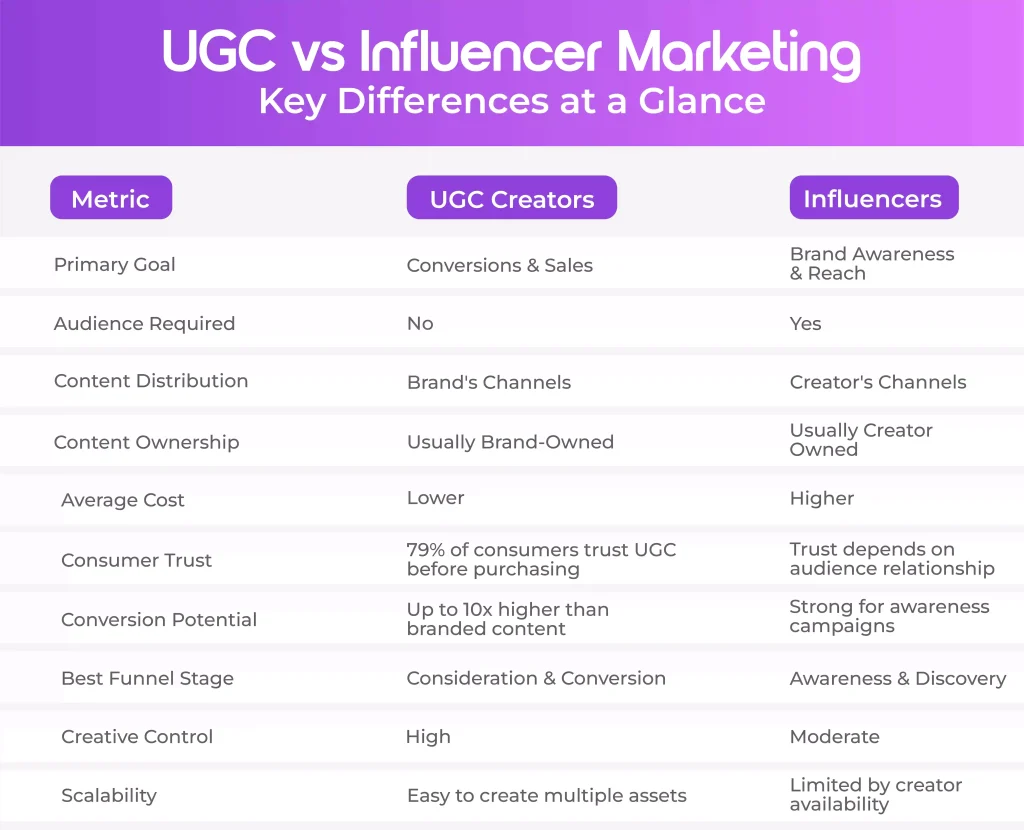
Although both contribute to creator marketing, understanding the distinction between a UGC creator vs influencer is essential when planning campaigns.
Audience Size and Reach
UGC creators may have little or no audience, while influencers provide brands with direct access to an established follower base.
Content Ownership Rights
Brands generally receive broader rights to reuse UGC content across various channels. Influencer content often requires additional licensing agreements.
Content Distribution Methods
UGC is primarily distributed through brand-owned platforms. Influencer content reaches consumers through the creator’s audience.
Brand Control and Creative Freedom
Brands typically maintain greater control over UGC content. Influencers often require creative flexibility to preserve authenticity.
Cost and ROI Comparison
UGC is usually more cost-effective because brands are paying for content production rather than audience access. This makes it attractive for performance-focused campaigns.
Benefits of UGC Marketing
Consumers increasingly engage with content that feels authentic and relatable. By highlighting real experiences and perspectives, brands can foster deeper connections with their audiences.
Higher Authenticity
UGC often feels more genuine because it reflects actual user experiences instead of highly polished brand messaging.
Better Conversion Rates
According to Billo UGC Marketing Statistics, UGC-based ads can generate up to 10 times higher conversion rates than branded content, highlighting the effectiveness of authentic content.
Cost-Effective Content Production
Brands can create a substantial volume of content without allocating large budgets to audience reach or influencer partnerships.
Reusable Marketing Assets
UGC can be repurposed across websites, advertisements, email campaigns, and social media platforms.
Improved Customer Trust
The Nielsen Trust in Advertising Report found that 84% of consumers trust recommendations from people they know more than traditional advertising. Understanding the importance of branding in business, brands often leverage UGC to reinforce credibility and customer confidence.
Benefits of Influencer Marketing
Influencer marketing has become a popular strategy for brands looking to increase visibility and connect with targeted audiences.
Expanded Audience Reach
Influencers help brands reach audiences that may be difficult to access through owned channels alone.
Faster Brand Awareness
Influencer campaigns can generate substantial visibility within a short period, making them ideal for awareness-focused initiatives.
Community Engagement
Creators maintain active communities that frequently interact with their content through comments, shares, and discussions.
Social Proof and Credibility
Recommendations from trusted influencers help strengthen product perception and increase audience interest.
Niche Audience Targeting
Many influencers focus on specific industries, interests, or demographics. If you are seeking greater online visibility for your business, influencer partnerships can help you connect with these audiences.
UGC vs Influencer Marketing by the Numbers
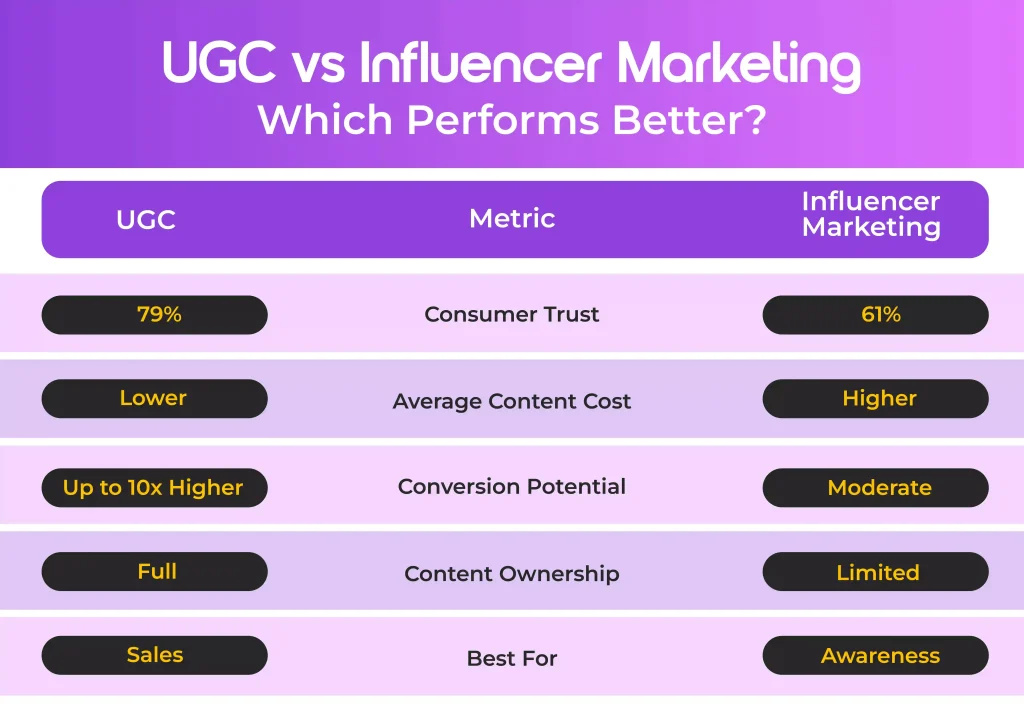
Statistics and industry research provide valuable insight into how each strategy performs across key marketing metrics.
Consumer Trust Comparison
Authenticity remains one of the strongest advantages of UGC. Nielsen reports that 84% of consumers trust recommendations from people they know over traditional advertising.
Cost Comparison
UGC generally requires a lower investment because brands pay primarily for content production rather than audience access.
Conversion Performance
The Influencer Marketing Hub Benchmark Report highlights that 89% of marketers say influencer marketing ROI is comparable to or better than other marketing channels. Many marketers use advanced digital marketing tools to evaluate performance and optimize campaign outcomes.
Where UGC and Influencers Fit in the Marketing Funnel
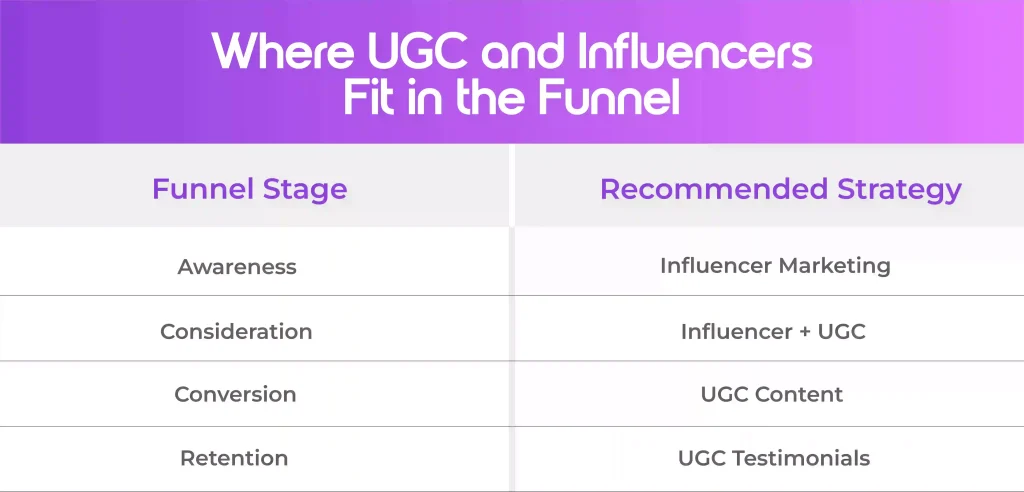
UGC and influencer marketing contribute differently throughout the customer decision-making process.
Influencers Drive Brand Awareness
Influencers are highly effective at introducing brands to new audiences. Creator-led live streaming campaigns can significantly increase exposure and engagement.
Combining UGC and Influencers for Consideration
Brands often repurpose influencer content into UGC-style assets during the consideration stage. This approach complements effective social media marketing strategies.
UGC Content Improves Conversions
UGC provides relatable experiences that help consumers evaluate products and make informed purchasing decisions.
Customer UGC Builds Loyalty and Retention
Customer-generated content encourages advocacy and long-term engagement. It also helps brands build brand reputation through authentic customer experiences.
When Should Brands Choose UGC Over Influencer Marketing?
While both strategies support business growth, there are scenarios where UGC is the more suitable choice.
For Performance Marketing Campaigns
UGC frequently performs well in campaigns focused on leads, sales, and conversions.
For Paid Social Ads
Its authentic appearance allows UGC to integrate naturally into social media feeds.
For Product Demonstrations
Considering UGC content creator meaning, they can showcase products in realistic settings, helping consumers understand their value.
For Budget-Friendly Marketing
Brands looking to scale content efficiently often choose UGC because it focuses on content production rather than audience reach.
For Website and Landing Page Content
UGC strengthens trust signals and supports conversion-focused experiences. Businesses working with the best digital marketing agency often use UGC extensively across landing pages and product pages.
When Should Brands Choose Influencer Marketing?
Influencer marketing is particularly effective when reach, visibility, and engagement are key priorities.
Product Launch Campaigns
Influencers can generate excitement around new products and services, helping brands gain momentum during launches.
Building Brand Awareness
Influencer campaigns can contribute to stronger search visibility by increasing brand mentions, engagement, and online conversations.
Entering New Markets
Creators with established credibility can help brands gain recognition in unfamiliar markets. This strategy often aligns with advocacy advertising initiatives.
Reaching Niche Communities
Influencers provide direct access to highly targeted audience segments that share common interests.
Increasing Social Engagement
Influencer content naturally encourages conversations and participation. To strengthen these efforts, digital PR activities are beneficial.
The influencer marketing industry is projected to reach $40.5 billion in 2026, demonstrating the growing investment in creator partnerships worldwide, as mentioned in the Influencer Marketing Hub Benchmark Report. At the same time, the global UGC platform market is expected to reach $8.5 billion by 2026, highlighting the rapid growth of user-generated content marketing based on the Grand View Research UGC Market Insights.
AI is also reshaping creator marketing. HubSpot’s State of Marketing Report states that more than 80% of marketers use AI for content creation and optimization. As a result, discussions around AI in branding continue to gain relevance for both UGC and influencer campaigns.
Conclusion
The discussion around UGC vs influencer marketing is not about choosing one approach and ignoring the other. Each serves a distinct purpose within a marketing strategy. Influencer UGC helps build trust, improve conversions, and create scalable content assets, while influencer marketing expands reach, increases awareness, and drives engagement.
The most effective campaigns often combine both approaches based on audience behavior and business goals. Partnering with the leading digital marketing agencies in India enables brands to manage creator campaigns and align them with broader digital marketing objectives.
FAQ
- What is a UGC creator?
A UGC creator produces user-style content for brands without relying on a large personal audience.
- What is the difference between a UGC creator and an influencer?
A UGC creator focuses on content creation, while an influencer provides both content and audience reach.
- Is UGC better than influencer marketing?
It depends on campaign goals. UGC often performs better for conversions, while influencer marketing excels at awareness and engagement.
- Can influencers create UGC content?
Yes. Many influencers create UGC-style content that brands can use across multiple marketing channels.
- Which is more affordable: UGC or influencer marketing?
UGC is generally more affordable because brands pay primarily for content creation rather than audience access.
- Does UGC help improve conversions?
Yes. Authentic customer-focused content often improves trust and purchasing confidence.
- How do brands use UGC content?
Brands use UGC in advertisements, websites, landing pages, email campaigns, and social media content.
- Should small businesses use UGC or influencers?
Many small businesses begin with UGC because it is cost-effective and supports conversion-focused marketing.
- Can AI replace UGC creators?
AI can assist content production, but authentic human experiences remain valuable for building trust and credibility.
- What marketing goals are best suited for influencer campaigns?
Influencer campaigns are effective for brand awareness, product launches, audience growth, engagement, and niche audience targeting.











What do you think?
[…] hashtags also helps maintain steady engagement. As digital strategies evolve, staying updated on Digital Marketing Challenges to Watch in 2026 can help marketers refine their hashtag campaigns and adapt to changing platform […]
Comments are closed.